
Turmeric powder in Sri Lanka became the talk of the town as the government imposed a ban on Turmeric imports. As a matter of fact, they did this to boost local production and help farmers. Nevertheless, the scarcity of Turmeric powder in Sri Lanka has created a storm in local kitchens. Owing to the imposed ban, the price of turmeric powder has skyrocketed to unimaginable levels in the Sri Lankan market.

Lack of Turmeric powder in Sri Lanka: A political debate
Sri Lanka produces Turmeric, however, the quantity cannot fully cater to the local demand. Hence, the reason why turmeric is expensive in Sri Lanka. As per the available statistics, Sri Lanka imported nearly 7,500 tonnes of Turmeric from Erode, yearly, before the total ban. Henceforth, the turmeric import ban was a controversial political debate in Sri Lanka. Many would agree the then government banned turmeric imports with good intentions. Straightaway, this bore fruit as local farmers grew turmeric as a serious cash crop.
Has the ban on turmeric imports borne fruit?
In Mannar, turmeric has become the salvation of farmers. Here, farmers grow coffee and, alongside it, have added the ginger-looking plant, turmeric. Moreover, this stretch of the country’s far north, filled with jackfruit trees and rice fields, dries annually due to drought. Uniquely, the green sprouts of earthy, fresh turmeric are ideal for this temperate zone and thrive in shady areas. In recent years, more and more farmers are cultivating turmeric because of the steady demand in Sri Lanka. Undoubtedly, cultivating turmeric is a thriving cottage industry today.
Similarly, people in rural Sri Lanka, use the vibrant orange root of turmeric as a home remedy to boost the immune system and ward off illness. Regardless, the government’s attempt to turn turmeric into a cash crop is noteworthy.
Major Growing Areas of Turmeric powder in Sri Lanka
Farmers grow turmeric in wet and intermediate zones as a single crop and as an intercrop under coconut trees. Until now, major growing districts are Kurunegala, Gampaha, Kalutara, Kandy, Matale and Ampara. Turmeric powder is produced using high-quality Turmeric tubers. Once the Turmeric tubers are boiled and sun-dried they are taken to mills. Subsequently, they are grinded in mills, specially made for the grinding of turmeric tubers.
Turmeric is commonly used in Ayurveda to purify the blood and to treat skin conditions. It is a powerful, anti-inflammatory agent, comparable to pharmaceutical medicines. To emphasize, it is also anti-viral, anti-bacterial, anti-fungal, anti-parasitic, anti-tumour, and anti-allergic. Additionally, external application of Turmeric in paste form stops pain and swelling and speeds up the healing process of wounds.
Similarly, Turmeric is an important medicine in Ayurvedic treatment of diabetes. Consumption of Turmeric is known to lower blood sugar levels. Moreover, Turmeric is also extremely useful in preventing liver disease and rebuilding the liver. Notably, Turmeric contains curcumin, the healing substance which supplies its vibrant colour
The Historical significance of Turmeric
The use of Turmeric dates back nearly 5000 years to the Vedic culture in India. During this period, and ever since turmeric is a popular culinary spice. Also, Turmeric has religious significance attached to it. In like manner, because turmeric is yellow, people use it to dye the robes, string, and clothes of monks. Not to mention, in Indian culture, the importance of turmeric goes far beyond medicine. At the same time, the Hindu religion sees turmeric as auspicious and sacred.
Using Turmeric powder in Sri Lanka for cooking
Turmeric powder is a key spice in Sri Lankan cuisine and has been ever-present in Sri Lanka. Hence, it is hard to imagine it would feature the black market. Consequently, people use turmeric powder for many spice blends, such as basic curry powder. Usually, when the blend gives a distinct yellow colour, it is because of Turmeric.

The flavour of turmeric powder is a little bitter, and a little peppery like mustard with a slight ginger flavour. Uniquely, people use turmeric for colouring more than for the flavour. Besides, turmeric powder gives colour to vegetables, meat, fish, rice and, sauces. Moreover, if you leave it out of a recipe, you may not notice much change in flavour. As can be seen, without turmeric, the dish will not have a golden hue.
Buying Turmeric powder in Sri Lanka from Kapruka
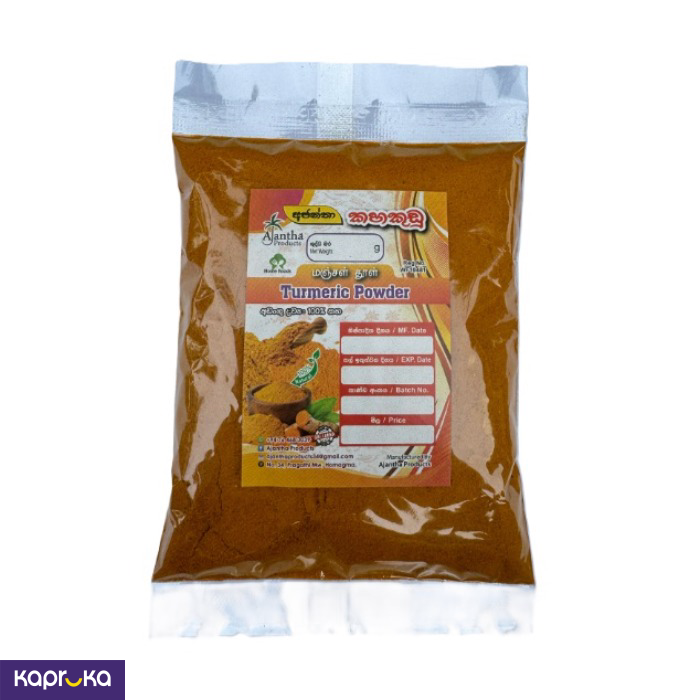
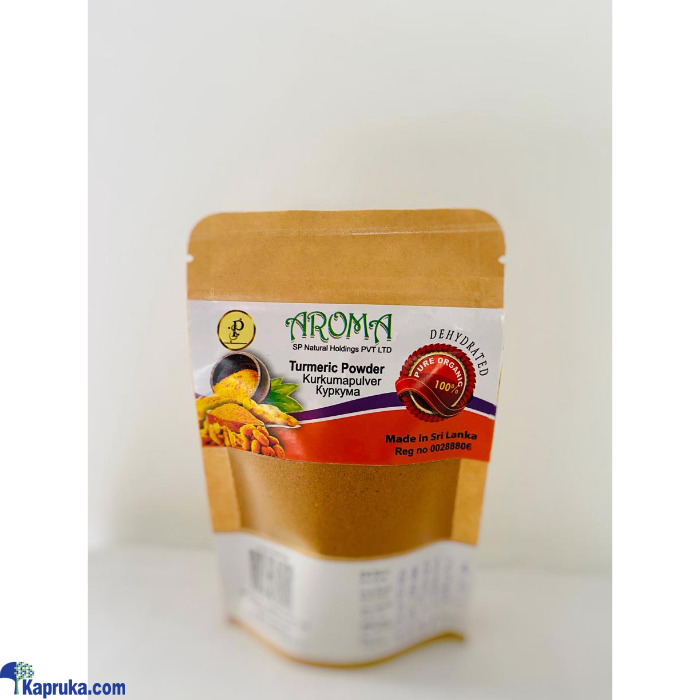
Want to buy turmeric powder? Search online, to find high-quality organic Turmeric powder in Sri Lanka. Thus, genuine turmeric powder from Kapruka is the best turmeric you can obtain in the market. In effect, the Turmeric powder available at Kapruka comes from the best suppliers with a quality guarantee.
Conclusion
In Sri Lankan cuisine, a pinch of turmeric powder gives the gold colour to the gravy. Hence, housewives value turmeric powder because it gives a subtle flavour, distinct yellow colour, and a powerful aroma. Of course, it’s hard to imagine cooking typical Sri Lankan curries without using Turmeric powder. Likewise, the influence of turmeric powder in Sri Lanka was once a subject of debate. Where? In the most zenith body in Sri Lanka, the parliament.

turmeric%20powder